

The Collaborative Pathway is a replication and adaptation of Open Dialogue at Advocates, Inc., the human services agency in Framingham, Massachusetts, where I serve as Medical Director. Last week, our team (Chris Gordon, Vasudha Gidugu, Sally Rogers, John DeRonck, and Doug Ziedonis) published an article in the Best Practices column of the journal Psychiatric Services, describing the program and our results from the first cohort of young people and families experiencing a psychotic crisis.
This is the first published adaptation of Open Dialogue in the U.S. and represents the culmination of several years of planning, training and direct service. None of it would have been possible without generous initial funding from the Foundation for Excellence in Mental Health Care.
We provided our services to 16 young people and families over a period of one year. Most have continued to receive services after the study period, so we have more substantial follow-up data than was published in this initial paper. It’s hard to draw many conclusions about Open Dialogue from such a small sample, but I would like to share some of the promising lessons we’ve learned along the way:
For all these reasons, we are the more grateful for the support we received from The Foundation for Excellence in Mental Health Care, and, more recently, from the Cummings Foundation, and from Advocates. Without the generous support of these organizations, we would not have been able to succeed. Thank you!
We still need support to continue this work, and deeply appreciate contributions to The Collaborative Pathway Fund here at the Foundation for Excellence in Mental Health Care.
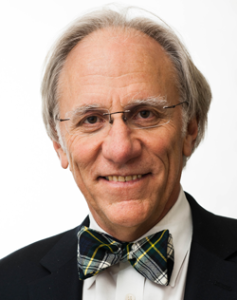 Dr. Christopher Gordon is a board member of the Foundation for Excellence in Mental Health Care and Medical Director and Senior Vice President for Clinical Services of Advocates, Inc., a full-service, not-for-profit provider of residential, outpatient and emergency crisis intervention services for people with psychiatric and developmental disabilities, and other life challenges.
Dr. Gordon serves as Associate Professor of Psychiatry, Part-time at Harvard Medical School, and Assistant Psychiatrist at Massachusetts General Hospital, where he teaches principles of collaborative formulation, about which he has published and lectured extensively.
He is also Adjunct Associate Clinical Professor of Psychiatry at the University of Massachusetts School of Medicine. He is certified by the American Board of Psychiatry and Neurology. Dr. Gordon is a Distinguished Life Fellow of the American Psychiatric Association.
In 2012, Dr. Gordon was named the Psychiatrist of the Year by NAMI Massachusetts. In 2007, he received the Distinguished Service Award from the Commissioner of the Department of Mental Health. In 2008, he received the Edward Messner Award for outstanding teaching of residents at MGH and McLean Hospitals.
Dr. Gordon is a certified practitioner of Open Dialogue, a progressive practice developed in Finland for the management of psychiatric crisis, and is a founder and clinical leader of the Collaborative Pathway at Advocates, Inc, the first US-based adaptation of Open Dialogue. He is married to Julie Gordon, and they have two sons, Morgan and Noah.








I believe this is a great program and Christopher Gordon is a great leader for the Collaborative Pathways approach to treating psychosis and mental illness
Good
You mentioned that you were able to see great improvement when people used the open dialogue model. I realize that this model is often used by therapists, but can anyone take a training on how to use this? I am close to having teenagers in the home, and I would like to know the best way to talk to them to keep the relationship that we have.