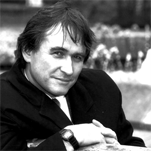
On August 1, Jeffrey Lieberman, M.D., the current President of the American Psychiatric Association, wrote an open letter to Psychiatry News asking whether is was time for psychiatry to “re-engage with pharma”.
Dr. Lieberman asserts that although there are problems with the way the public perceives drug companies, he thinks it is time for psychiatry to re-evaluate its connections to the industry. He reports on a recent meeting of the American Psychiatric Foundation Corporate Advisory Council with representatives of 14 pharmaceutical companies.
Read MoreThis is the headline of the editorial in the most recent edition of Current Psychiatry. It is written by Henry A. Nasrallah, MD, a prominent psychiatric researcher. This is one of the free journals sent to, I assume, every psychiatrist in the US. Although it says it has a subscription cost of $113/year, I know I have never been asked to pay. I assume it is supported by its advertisements, 18 pages of which in this 54 page journal were from drug companies.
Read MoreErick Turner has published an important piece in CNS Drugs entitled “Publication Bias, with a Focus on Psychiatry: Causes and Solutions.” It should be required reading for any medical student, non-medical helping professional, or practicing prescriber. Rather than being an unbiased reflection of the underlying data, the psychiatric literature is instead sort of a funhouse mirror – the published results are consistently, overwhelmingly, positive – no matter what the actual data are. The implications are enormous. Note that the methodology in such trials is often deliberately constructed to bias such trials in favor of the sponsor’s drug – even so, publication strategies are used to minimize any bad news resulting from such trials, and to maximize the impression that the drug is effective.
Read MoreToday I read Psychiatric News, the newspaper of the American Psychiatric Association, and I was drawn to an article about the new APA President, Jeffrey Lieberman, because the front page teaser announced that “he is ‘mad as hell’”.What, I wondered, is he so mad about?
In the article, which reports on Dr. Lieberman’s address at the opening session of the annual APA meeting in May, we learn that he is angry not only about “stigma associated with mental illness” but also “the lack of respect toward psychiatry as a medical specialty”.
Read MoreThe passage of Dr. Dean K. Brooks this past week, just six weeks before his 97th birthday, didn’t catch those of us who knew him and loved him—and you couldn’t know him and not fall in love with him—off guard. He fell about two weeks before he died and he told me, “Bob, I’m not going to make it.” He had reason to know about death. Several times, he talked with me and others about his “NDEs”—near death experiences, in which he realized he was dying and entered a beautiful room with blue flowers all around. Each time, a caring nurse lightly touched his chest and told him he would be alright. But this time it didn’t happen that way and I think he was ready.
Read MoreRecently I had dinner with several primary care physicians who had just read Anatomy of an Epidemic. They had heard of my interest in this book and they asked to discuss it with me.These are physicians I have known for many years and in my opinion they reflect everything that is good in medicine. They are dedicated, caring, and humanistic. But the conversation reflected for me everything that is wrong with the modern practice of medicine. Although there are the ways in which psychiatry is different from the rest of medicine, there are ways in which it is similar and I am not sure we can expect much to change if we do not address some of these similarities.
Read MoreJudith Shulevitz, the science editor for The New Republic recently wrote an interesting article on loneliness.It caught my eye because it started with a nod to Frieda Fromm-Reichmann, the psychoanalyst who was immortalized in Joanne Greenberg’s fictionalize memoir of her recovery from psychosis, I Never Promised You a Rose Garden. Ms. Shulevitz goes on to describe the field of loneliness studies from a psychological to a neuroscience perspective.
Read MoreThis month the American Psychiatric Association will publish its fifth edition of the Diagnostic and Statistical Manual. This publication has been met with criticism and skepticism.As the medical director of a community mental health center, my colleagues look to me for guidance on how to approach this new edition. How many should we buy? How much time should be devoted to staff training? Although this is a book published by psychiatrists, it has become widely used as the basis for diagnosis by many clinicians.
Read MoreFor the past 20 years, there has been a prevailing concern in psychiatry that psychosis is bad for the brain. The notion is that the psychotic process is in and of itself damaging and therefore every effort should be made to curtail this process in order to forestall further damage. This idea heightened the urgency to initiate drug treatment. When I read Anatomy of an Epidemic, this was one of my most pressing concerns; If I suggested to my patients that they pursue other treatments before starting drug treatment, was I helping or harming them?
Read MoreTWO New York City researchers, Pat and Jake Cohen, undertook a very interesting study in the early 1980s. Both were statisticians in two different departments of psychiatry in the city. Together, they had written one of the primary textbooks on multivariate analysis. In another collaborative study, they looked at the composition of physician caseloads, including, but not limited to, psychiatry. What they found was startling.
Read More