
Project “Shifa” is the Community Mental Health project at Padhar Hospital. Covering a target area of 75 tribal villages, it runs on a limited budget financed primarily by donations from well-wishers. The team consists of a psychiatrist, a coordinator, ten community field workers and nursing students posted in the psychiatry department. Patients with mental disorders and epilepsy face stigma and persecution, and often undergo painful and dangerous rituals as “cures” due to superstitions. Remote locations, poverty and lack of adequate transport facilities make access to the hospital difficult. This state of affairs is common in rural settings across the developing world, a problem compounded by the lack of trained mental health professionals.
Activities of the project include awareness-building about mental health issues and epilepsy, door-to-door screening by field workers using a specially-designed screening tool, weekly outreach clinics by the entire team in selected village settings, provision of free medicines in the field for those with severe mental disorders and epilepsy, referral of those with less severe mental health issues to the hospital for interventions including psychotherapy, Group Therapy sessions with a psycho-educational focus in the field, conducting community-level research to improve service provision, and a mechanism to follow up those patients receiving medicines in the field.
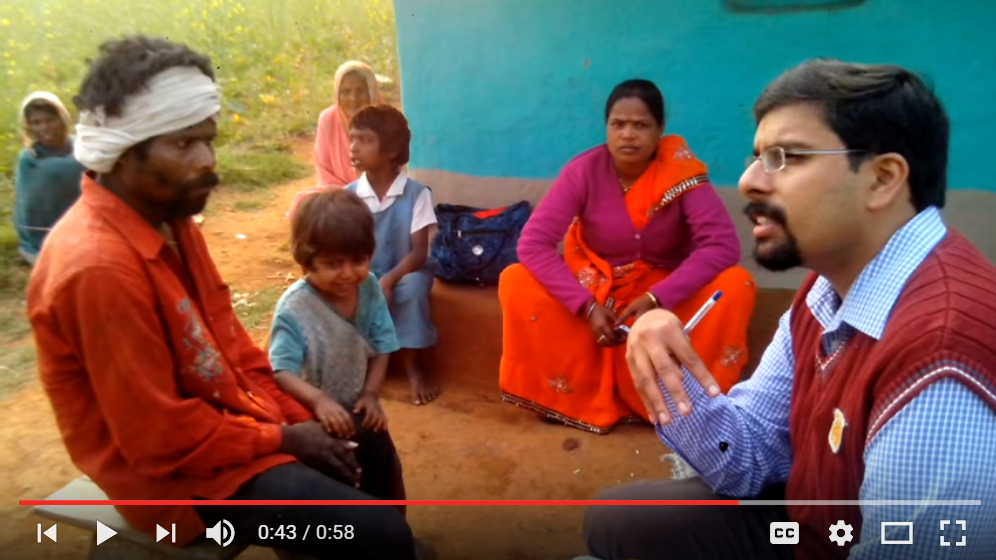
A “cursed” household released from bondage
The Dhurve family belongs to a very small village called “Chitribad”, which is about 20 km away from Padhar itself, and is almost impossible to access without a large vehicle due to difficult terrain and incomplete roadways. There are five members in this family – the mother (a widow), 1 daughter, 2 sons and a daughter-in-law. The family is very poor, and they have nothing except a small piece of agricultural land that they can call their own. The father had died very early, leaving the mother as the sole caretaker of the family. Both sons and the daughter have severe psychiatric illnesses.
The eldest son Tulsi, 30 years old, got married about five years back. One year after marriage, he had his first epileptic seizure and has had regular and frequent seizures since then. Subsequently, he also developed a psychotic disorder. He started talking to himself, wandering out of the house and behaving angrily, trying to assault other people. Over the past four years, he was taken to several religious and witchcraft practitioners as the family members believed that he was possessed by a demon. He was also taken to one private doctor, but his condition did not improve.
Shyamkali Bai, the 26 year old daughter, is suffering from Bipolar Disorder. Sometimes, she felt very depressed for weeks, while other times she suffered from manic episodes and felt excessively happy and excitable. She would usually get at least one episode per year, and behaved normally during the intervening periods. Due to this disorder, she was also not able to contribute towards the household earnings and remained dependent on her mother. This has contributed to the deteriorating socio-economic condition of the family.
The condition of the household grew even worse when the youngest son, 22-year-old Munsi, also developed a psychotic disorder (schizophrenia) last year. He started talking to himself, became very suspicious of others, started wandering around aimlessly and assaulting people. Like Tulsi, both Shyamkali and Munsi were also taken to various religious and witchcraft practitioners, on which a lot of the meager family income was spent and their economic condition worsened further.
This family was visited and evaluated by the Shifa team during one of our visits to their area. The mother and daughter-in-law were educated regarding the nature of their problems and relevant management strategies. All the psychotic symptoms, mood fluctuations and seizures were controlled and all of them started living normal lives. All three started going out for agricultural labour work and started earning. Within three months of their first contact with the team, they were free from the clutches of mental illness and had started living happily again.
The Dhurve family are now among the most ardent supporters of our project in their area, and always host the team at their house when we visit their village.
Dr. Johann Ebenezer MBBS, DPM, MD is a psychiatrist at Padhar Hospital, Betul District, Madhya Pradesh, India and oversees the Shifa Project.











wonderful article. thank you. Bob