Wishing you many blessings in 2018, the happiness you deserve, and challenges removed from your path! May we all approach 2018 with gratitude for what we have and the tenacity to improve the world we live in.
Here at The Foundation for Excellence in Mental Health Care we are most grateful for all the projects and research being funded by you, our donors. It is these very projects that are helping to improve the world we live in by affecting access to recovery-based programs and research knowledge to help people make more informed choices for their own mental health.
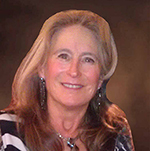
Read More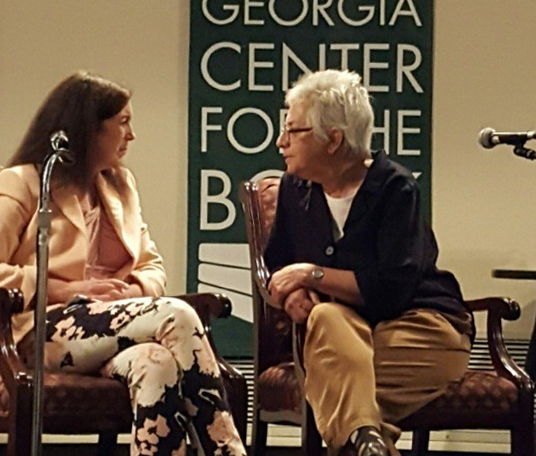 Gina Nikkel, PhD and Gail Hornstein, PhD in Atlanta at the April 5 panel discussion “What can we learn from people who hear voices?”
As President and CEO for The Foundation for Excellence in Mental Health Care (FEMHC) I have to admit that I get to participate in some life changing meetings and meet extraordinary people. This past week was no exception.
Read More Philanthropy…what’s the first thing you think of? “I don’t have that kind of money to give away” or “they’re not talking to me”.
phi·lan·thro·py, noun: the effort to increase the well-being of humankind.
Yes, we are talking to you!
Here at the Foundation for Excellence in Mental Health Care we are committed to connecting the passion of private philanthropy (YOUR passion to make the world a better place) with the world’s best researchers and programs to bring recovery practices to every community. You are essential to bringing the hope and tools for mental health recovery to people living in despair and confusion.
This past summer, you answered the call to action by giving dollars towards our matching grant to buy the financial management software we need to grow. This year, you gave to infrastructure, recovery programs, and research projects and took part in educating yourselves and others through our on-line classes or symposia to further our mission. Thank you for your response! Collectively we have proven we can make progress!
As you begin to plan your end-of-year giving, here is what we still need to take us into 2016:
You can also help change the world by sharing this newsletter with your friends, family, and co-workers and ask them to subscribe to our newsletter online at MentalHealthExcellence.org. Like us on Facebook and Twitter and consider becoming an EXCELLENCE donor.
Drop us a note at [email protected]. We would love to hear from you.
Thank you for being part of the EXCELLENCE family!
Gina Nikkel
President/CEO
 The Saks Institute Spring 2015 Symposium was held on Monday, March 30th at the USC Town & Gown Ballroom in Los Angeles. The Saks Institute for Mental Health Law, Policy and Ethics is a think tank founded to foster interdisciplinary and collaborative research among scholars and policymakers around issues of mental illness and mental health. As a research institute, the goal is to study issues at the intersection of law, mental health, and ethics as well as influence policy reform and advocacy actions for improved treatment of people with mental illness. Professor Saks was a 2009 recipient of the MacArthur Foundation fellowship and in fall 2010 announced that she was using funds from the “genius grant” to create the Saks Institute for Mental Health Law, Policy, and Ethics. The Institute spotlights one important mental health issue per academic year and is a collaborative effort that includes faculty from seven USC departments: law, psychiatry, psychology, social work, gerontology, philosophy and engineering.
 Jacqui Dillon is National Chair of the Hearing Voices Network, England, and Gail Hornstein, PhD, is an author and Professor of Psychology at Mount Holyoke College. They are advisors to the Hearing Voices Research & Development Fund at the Foundation for Excellence in Mental Health Care.
Interview by Gina Nikkel, PhD
Q. Gail & Jacqui, it is fantastic news that the Hearing Voices Research and Development Fund has received $250,000 in new funding. What is your long term vision for the Fund?
A. We have been building the infrastructure for the Fund and planning this project for several years and are delighted now to be able to move forward. Our long-term vision is to enable people all over the United States to have access to hearing voices peer-support groups the way people in Britain and Ireland and Australia and Denmark and 25 other countries around the world currently do.
Read MoreThe Foundation for Excellence in Mental Health Care just completed its fourth annual board retreat in North Carolina-with views of the Blue Ridge Mountains just out the window and views of the Foundation’s future just as intriguing.
Time together as a board is always stimulating and energizing. This year was exceptional in that way with reports on initiatives that are clearly bearing more and more fruit for changing the standard of care from medical maintenance to vibrant recovery. Five presentations constituted highlights for me as President and CEO and for every board member present.
The first of these reports was Dr. Chris Gordon’s on the Collaborative Pathway early psychosis project, which is entering its third year in Framingham, Massachusetts. Chris’s honesty in sharing his views of the process of adapting the Finnish Open Dialogue model to a working-class New England community was matched by his excitement about the results for young people and their families-young people who are returning to school, getting into the job market and reducing and in some instances eliminating the use of psychiatric medications. Several board members told me it was one of the best program presentations they had ever heard.
Dr. Doug Ziedonis, Chair of the Department of Psychiatry at the University of Massachusetts Medical School, complemented Chris’s report with
Read MoreI had intended this article to be an overview of EXCELLENCE as the first Community Mental Health Development Bank and how together we can pool our resources to pay for much needed unbiased research as well as recovery-focused programs.
I also wanted to make the appeal for becoming one of our $1 million dollar donors so we can continue building our endowment fund or tell how, for a much more modest contribution, you can help us achieve our $250K Challenge Grant.
Instead, I am going to focus on what I see as one of the most critical issues we are all facing which is underscored by the people I come in contact with on a daily basis. FIRST DO NO HARM. It doesn’t take a medical degree to understand the basic rule of care: help people, and if you can’t, at least don’t harm them. Of course. And yet, we the healers, people with lived experience, family members, public policy experts, and community members are so busy shooting at each other over what mental illness is or is not and how we ought to treat “it”, we have lost sight of our basic humanity and the suffering and compassion that are indivisible parts of the human experience. There are a lot of people in the world of mental health care who are showing compassion but not nearly enough.
Read More HR 3717, authored by Congressman Tim Murphy, has been introduced in response to mounting concerns about the treatment of persons with mental health challenges. It is universally recognized that improvements are needed in the mental health system. Unfortunately, HR 3717 will have serious unintended consequences. It will reverse many key advances made in mental health care in the last 30 years and place federal and state governments at high risk for litigation under the Americans with Disabilities Act and the Supreme Court’s Olmstead decision. No other population needing care is subject to the civil rights violations that will be implemented by the provisions of this bill. Furthermore, the criteria proposed for coercing people into treatment, especially mandated medication usage, will bring a new level of government intrusion and control. Finally, HR 3717 completely ignores emerging scientific research regarding long-term harmful outcomes of medication use and the negative impacts of forced treatment.
Increased discrimination and stigma will be the result of several of the bill’s provisions. These are based on an erroneous belief that people with mental health challenges are more prone to violence than other populations. This mistaken proposition ignores a great body of evidence showing that they are more often victims of violence, not perpetrators.
Read MoreChildren’s mental health matters! Right now, until Friday May 15, 2013 at 5pm EDT, you can help children by participating in the public comment process on seven pediatric antipsychotic medication use measures. The National Collaborative for Innovation in Quality Measurement (NCINQ) seeks feedback on seven proposed Antipsychotic Medication Use measures being developed for use by state and federal programs.
Read More